Cox’s Bazar Field Visit Highlights Ongoing Humanitarian Response and Evolving Needs of Displaced Communities
Company: International Federation of Red Cross and Red Crescent Societies - IFRC
Programming example
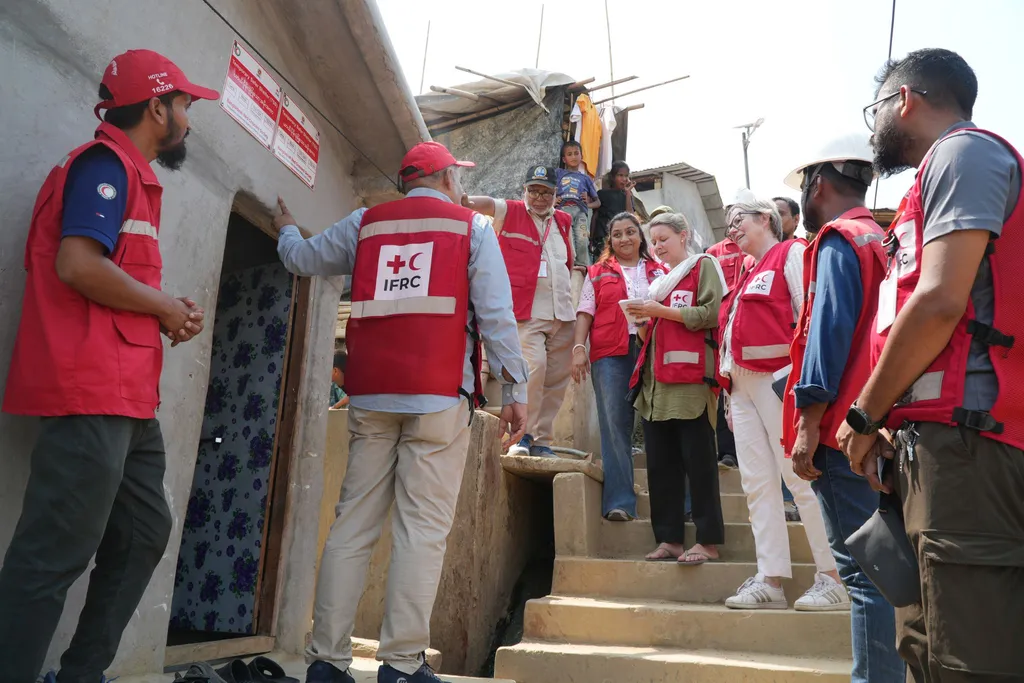
Today, I had the opportunity to visit the camps in Cox’s Bazar alongside colleagues from IFRC regional office, Regional Head of Humanitarian Diplomacy, Hanne M Mathisen, and Regional Lead of Migration and Displacement, Helen Brunt . Together, we spent time understanding ongoing challenges and exploring how we can continue to strengthen our response.Since 2017, the International Federation of Red Cross and Red Crescent Societies - IFRC , together with the Bangladesh Red Crescent Society (BDRCS), has been supporting people affected by displacement through the Population Movement Operation. During today’s visit, we:• Observed the work of our Field Hospital • Met with community leaders from the displaced community • Took part in a cyclone preparedness drill • Visited temporary safer shelter interventions • Spoke with the Camp-in-Charge • Listened to people especially women, adolescent girls, and new arrivals about their experiencesOne of the most meaningful moments was seeing the impact of the temporary safer shelters. These are not just structures, they provide comfort, dignity, and a sense of safety. A woman who recently received one shared her experience. Previously, her family lived in a bamboo and tarpaulin shelter. While it could withstand heavy rain and strong winds, the heat made daily life difficult, especially for her children. Now, she describes her new shelter as cooler, safer, and more livable. Her words reflect a simple yet powerful improvement in everyday life.There have been important gains over time. Awareness of disaster risks has increased. Shelter conditions are gradually improving. Access to healthcare and basic services has expanded. Many people are developing new skills, and communities are increasingly supporting one another through local, community-led efforts.At the same time, significant challenges remain. New families continue to arrive from Myanmar. Many still lack adequate food and basic necessities, and none having received shelter yet. Gender-based violence remains a concern, along with risks such as trafficking and abduction. With funding becoming more limited, pressure on already vulnerable communities is growing. Many people remain uncertain about their future and deeply concerned for their children.Today’s visit was a reminder of both progress and responsibility. While much has been achieved, the needs remain immense. Now more than ever, sustained support and collective effort are essential to ensure that people can live with safety, dignity, and hope.
Communities
- Refugee & Immigrant
Formats
- Volunteering & Service Day
- Offsite Event
Goals
- Give Back